The four elements of good cooking.
Samin Nosrat's 2017 book strips cooking down to four principles. Master them and you can cook almost anything — no recipe required.
Walking you through a recipe I made — breaking down each of the elements as we go.
One plate. All four elements.
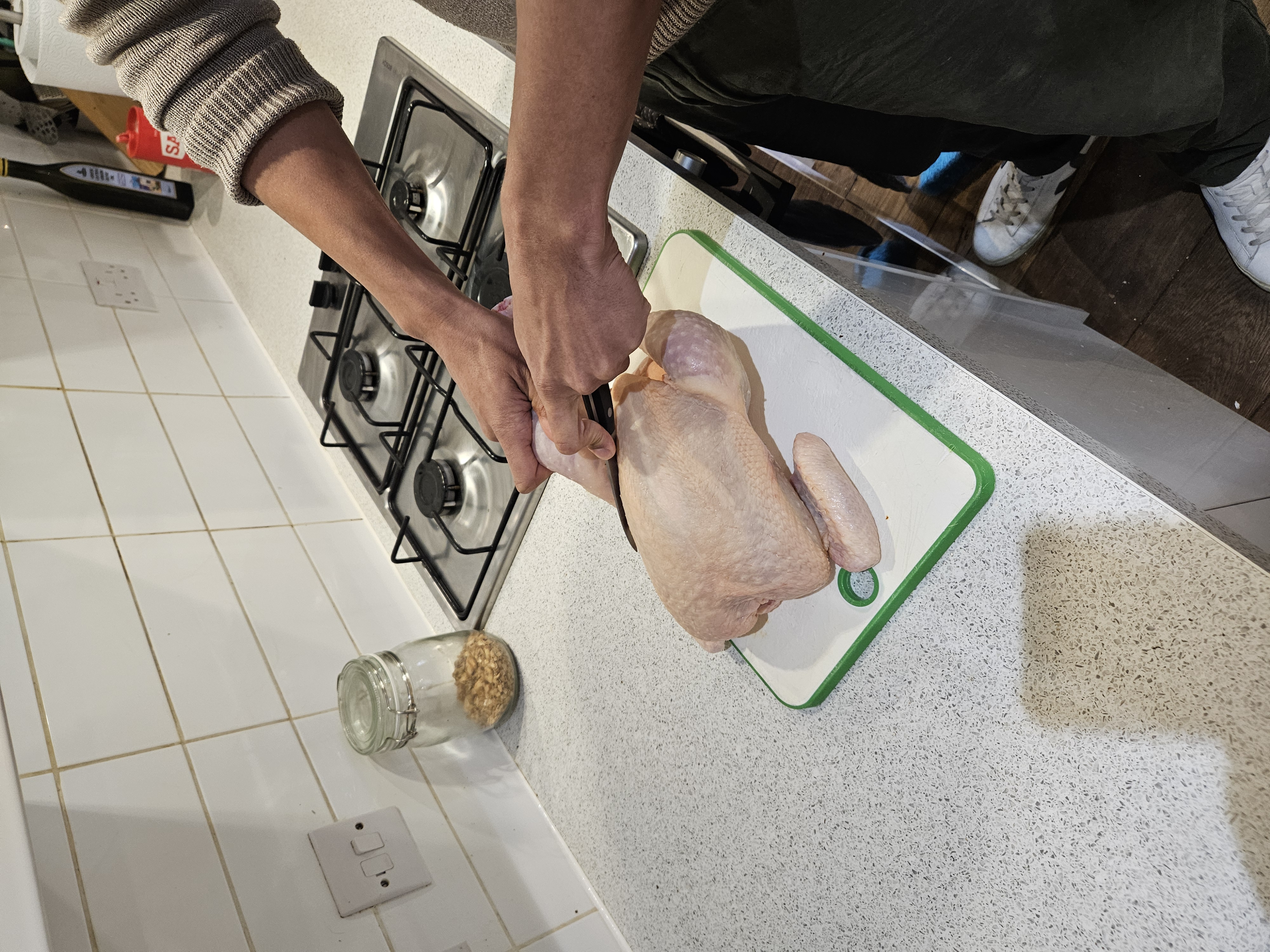
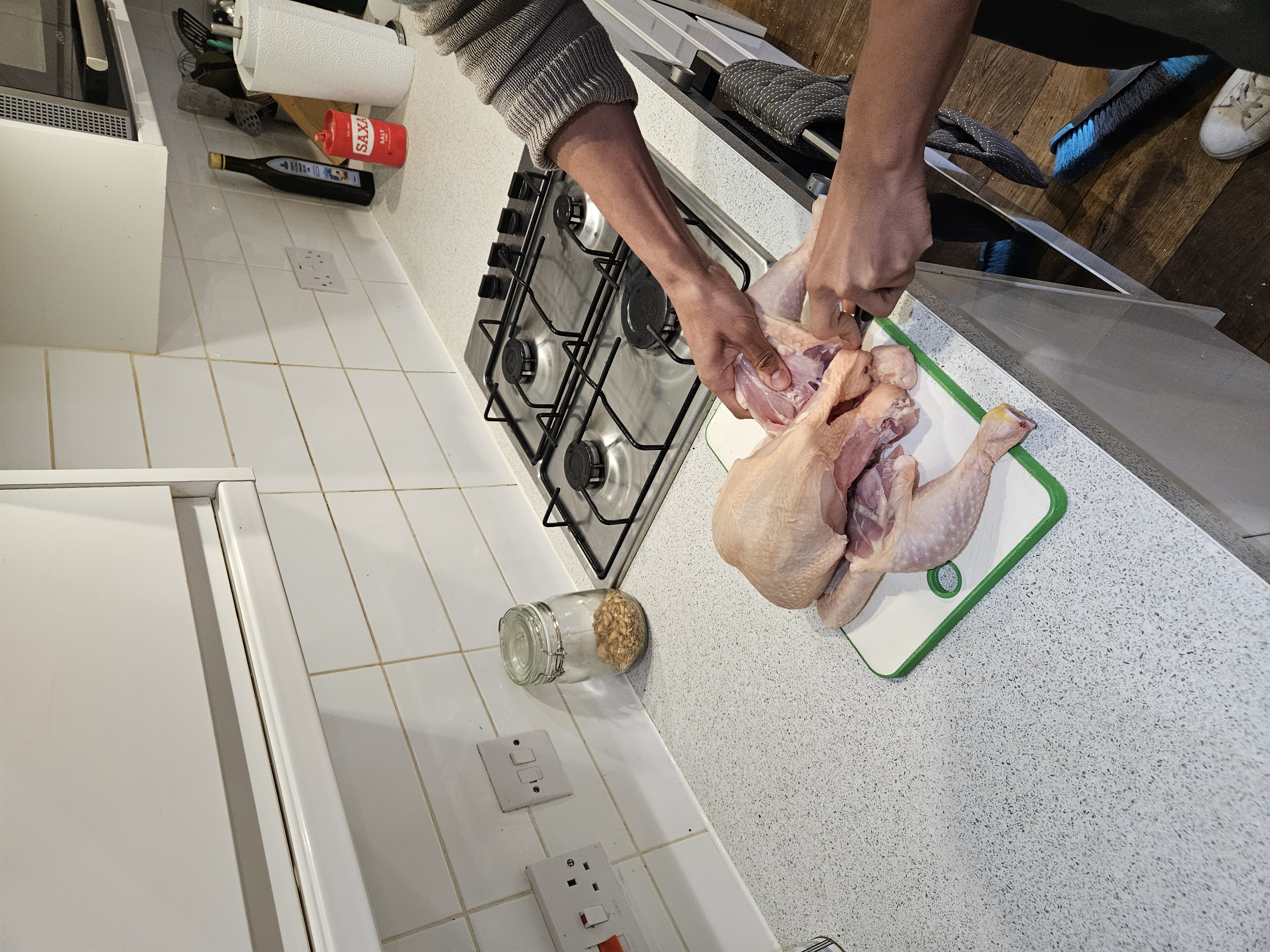
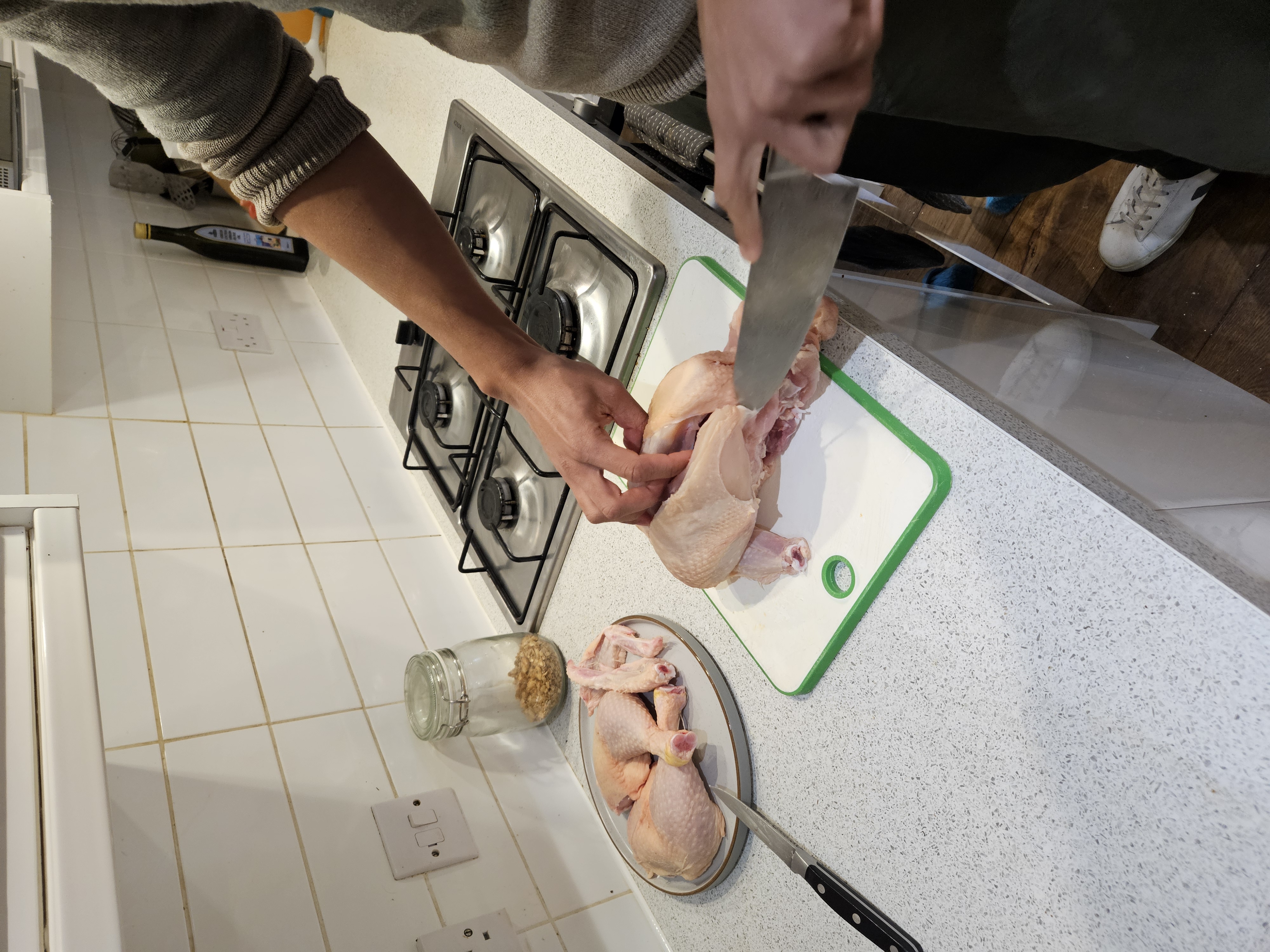
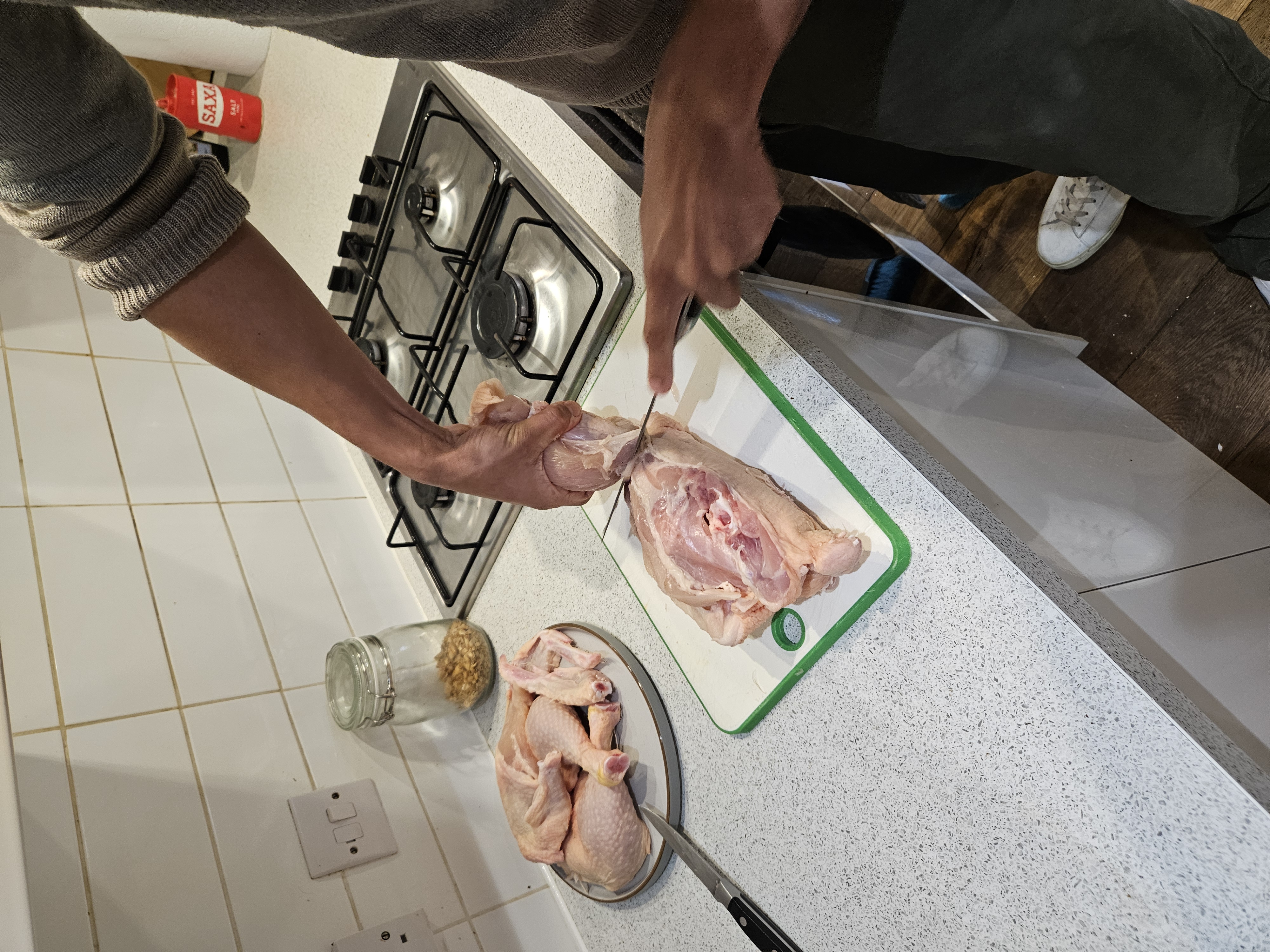
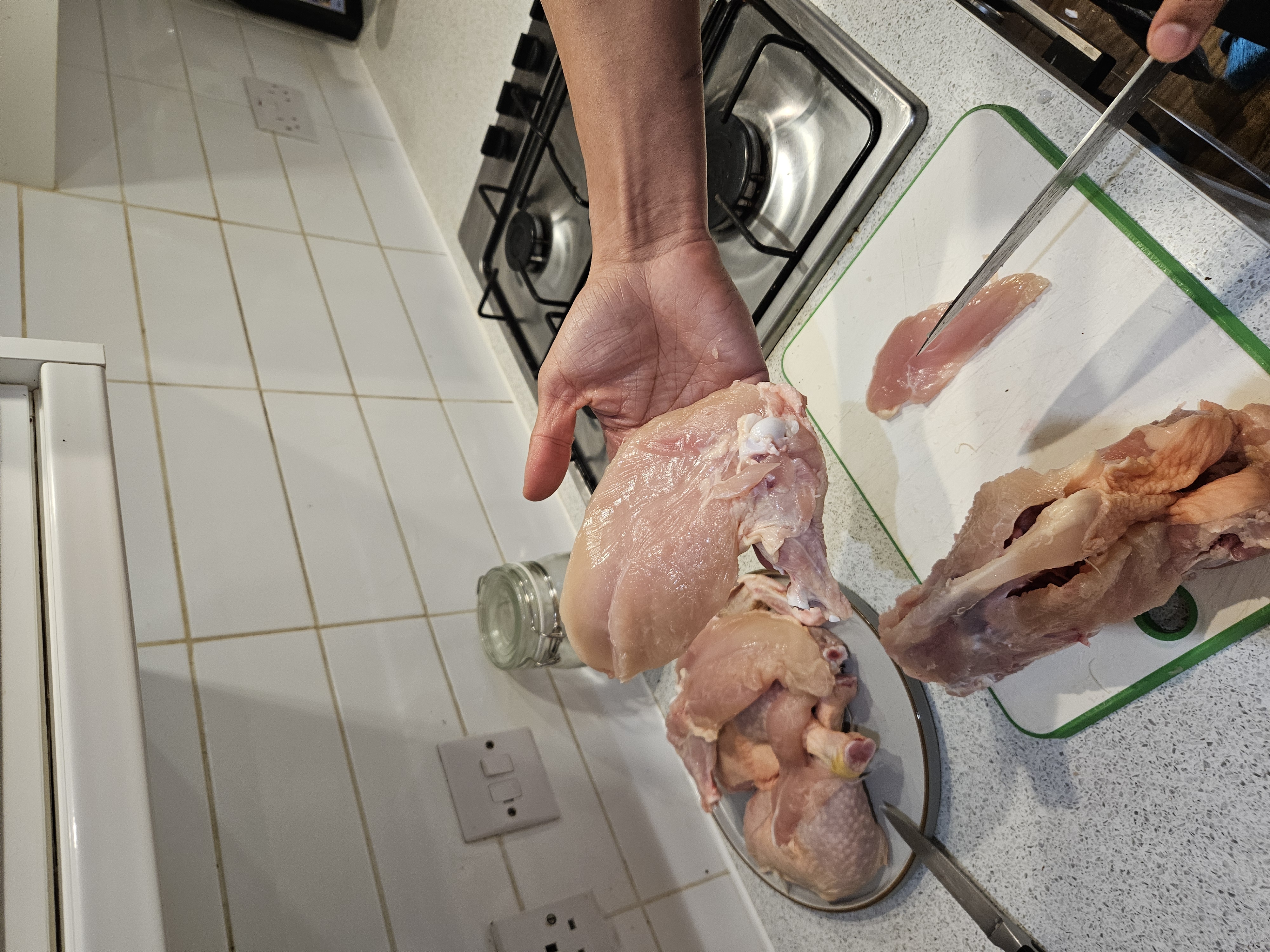
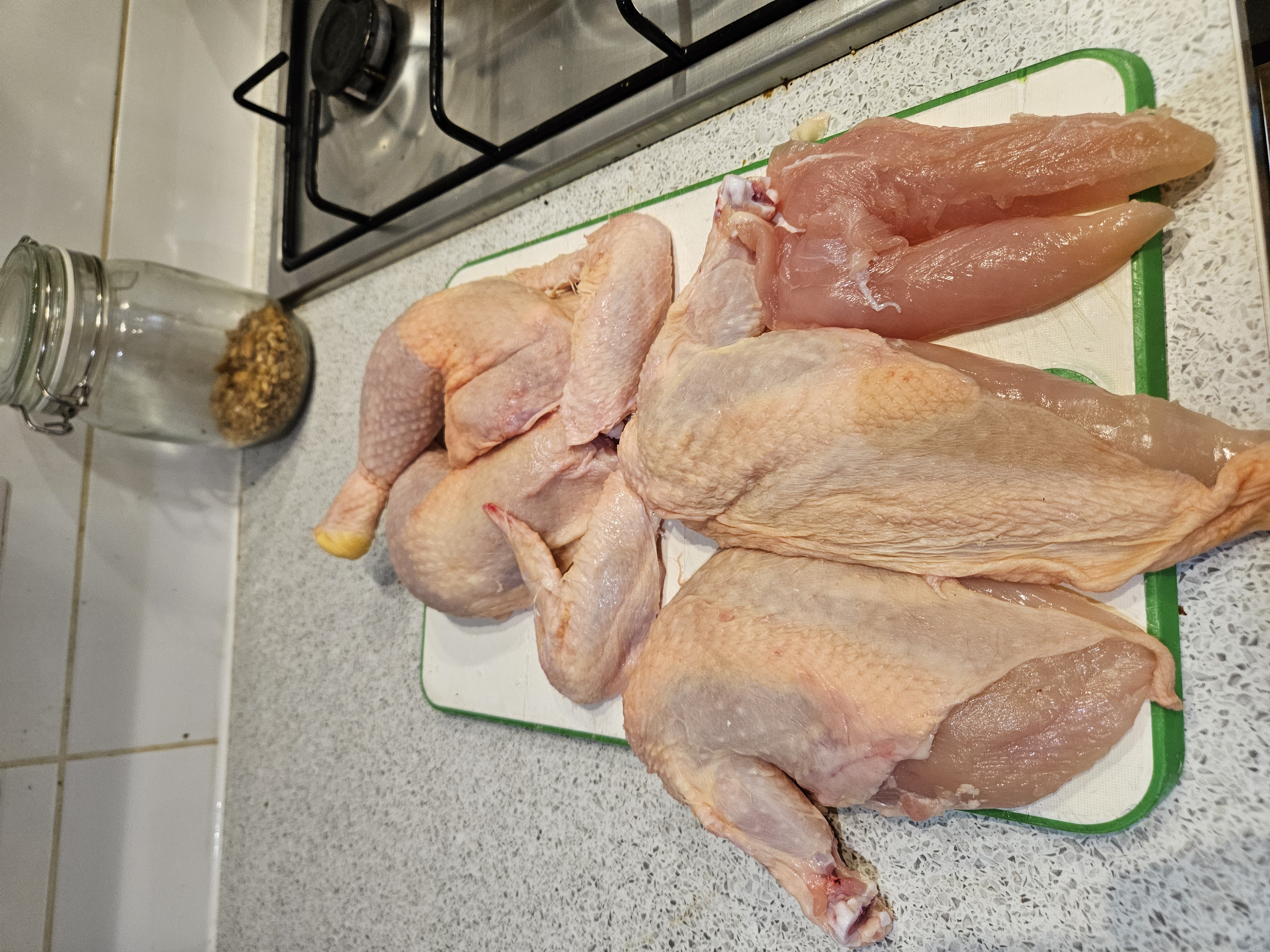
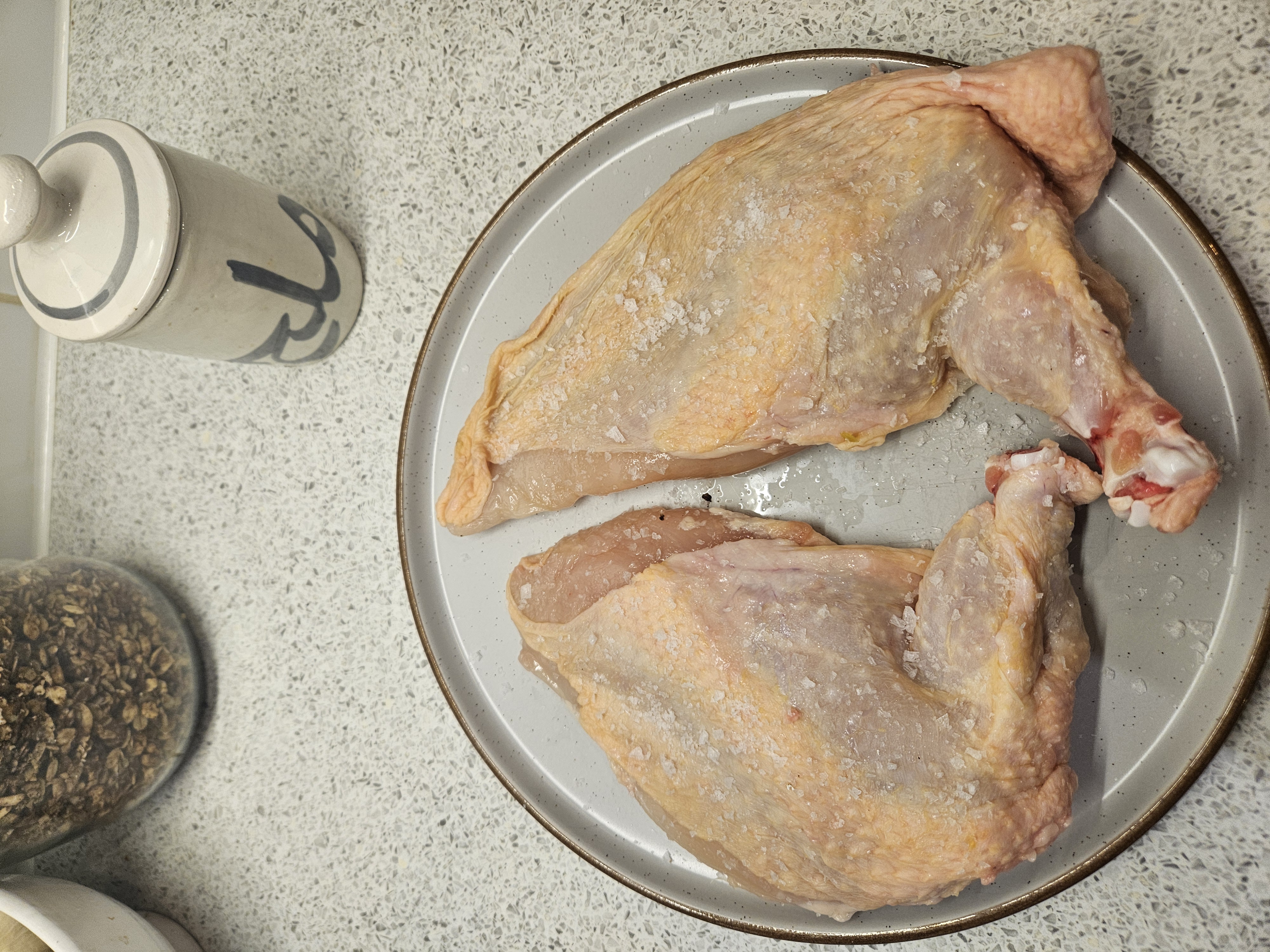
Butchering a chicken is easy with a sharp knife and a little practice.
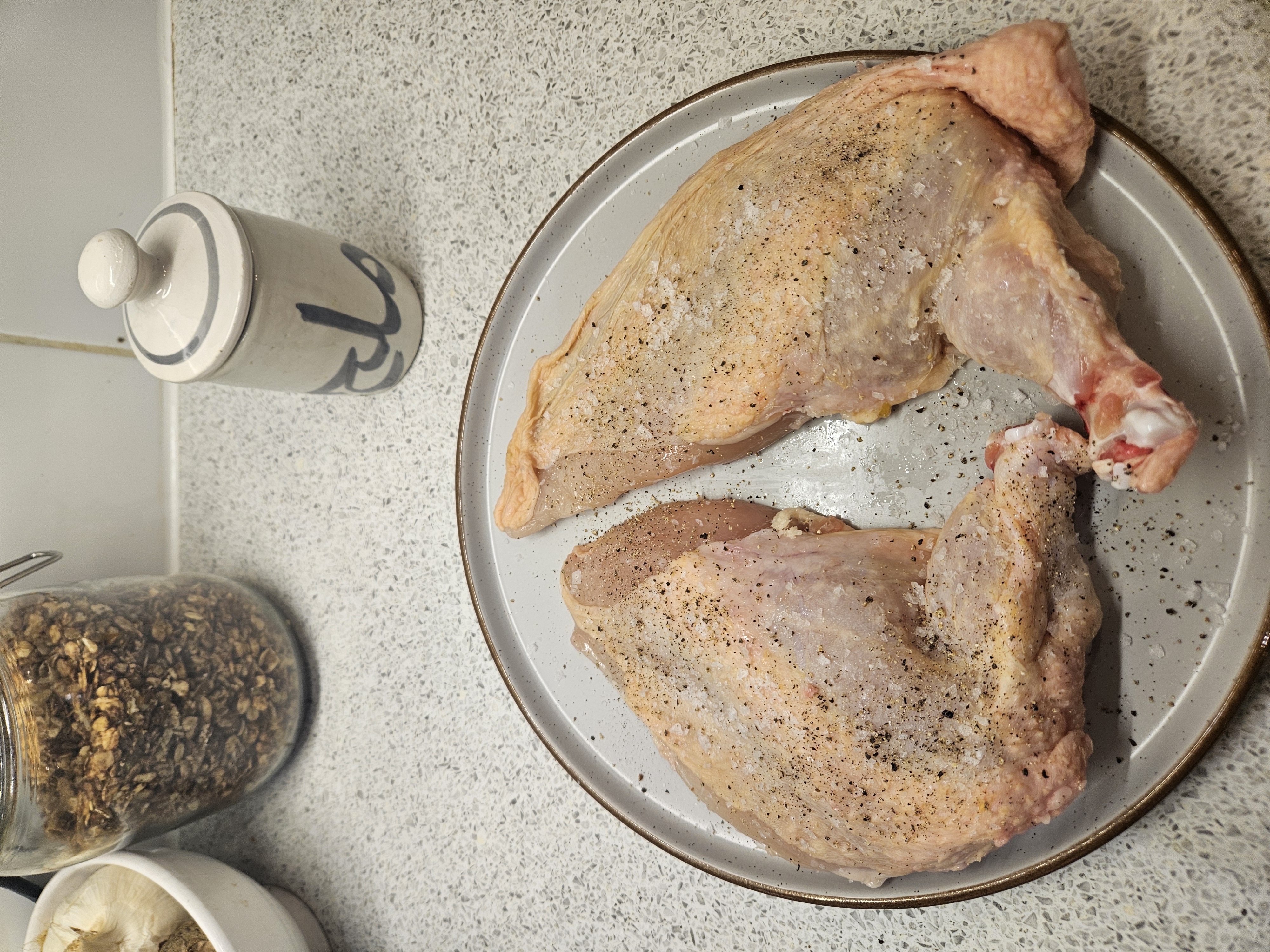
The end result — the "supreme" or "airline" cut: breast with winglet attached. Looks restaurant-quality for basically no effort.
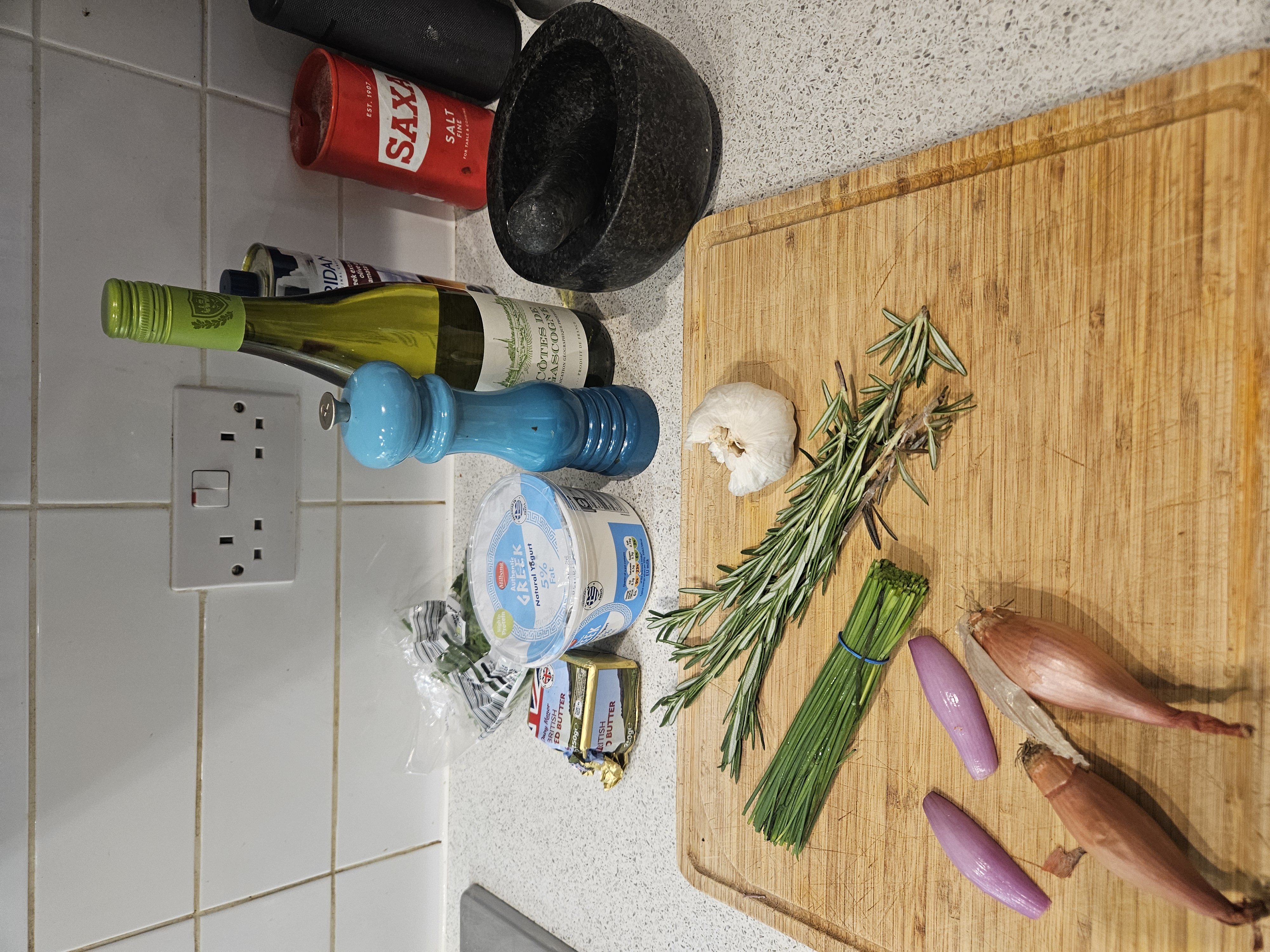
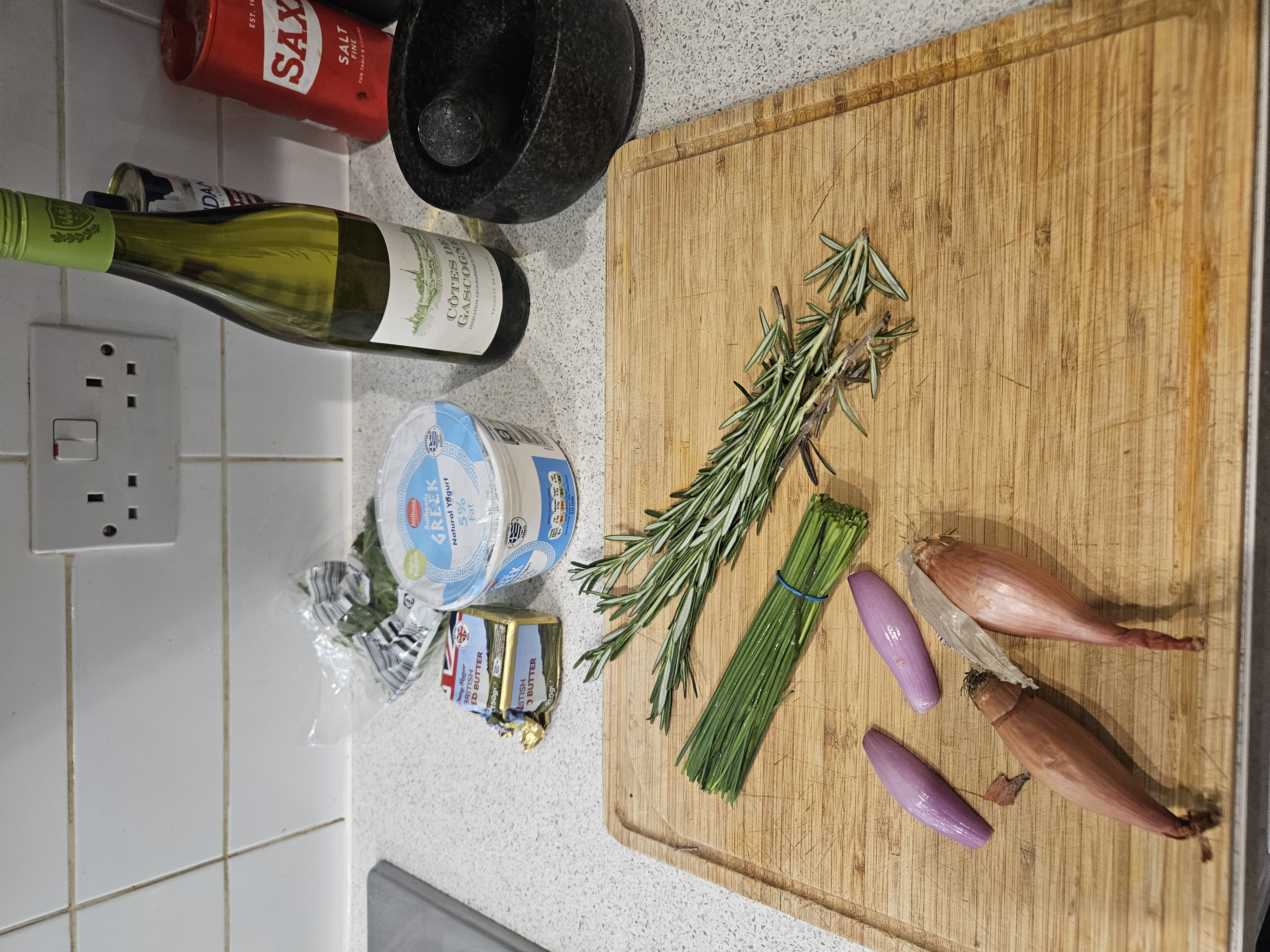
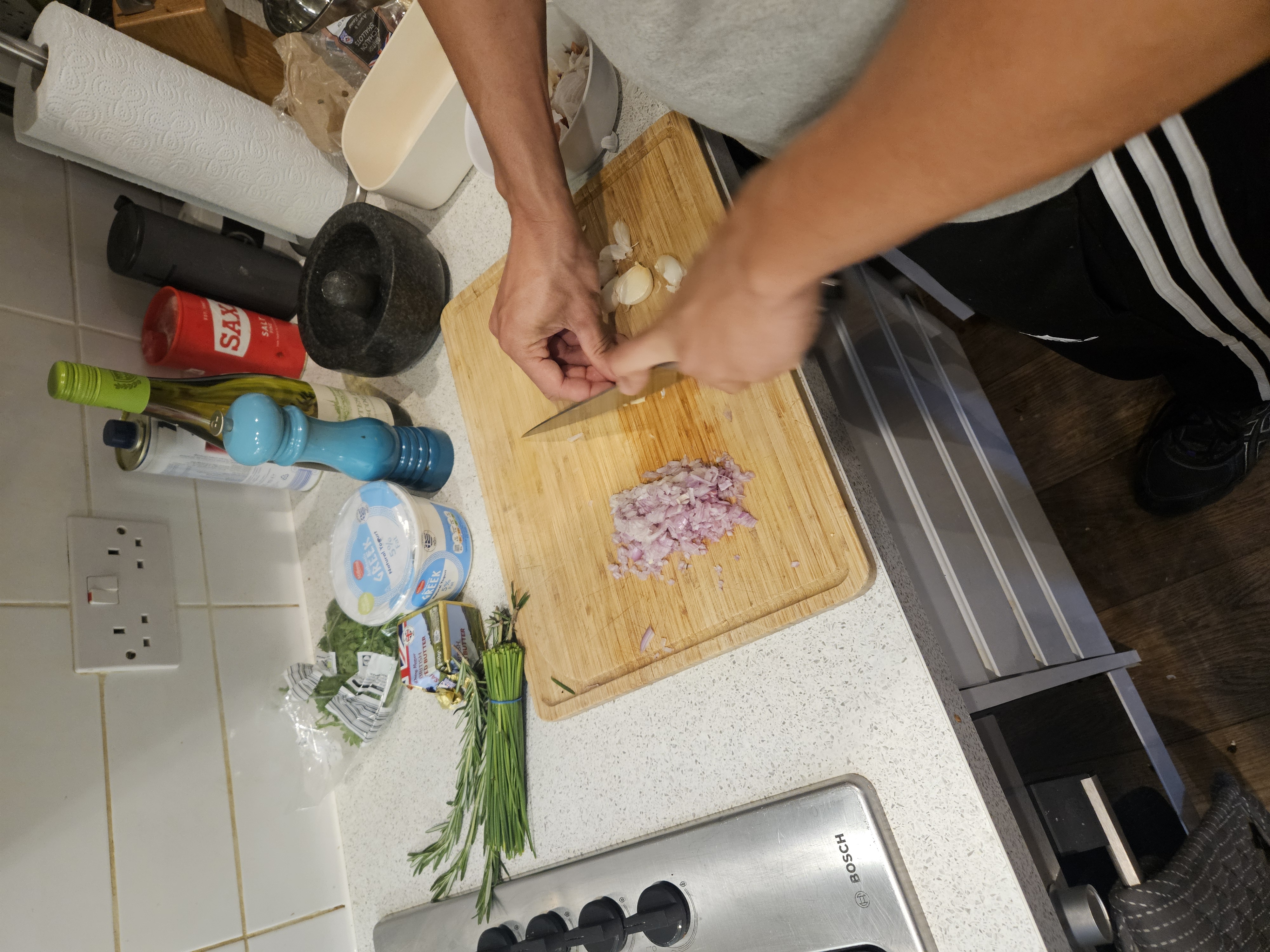
Do it first. Once the pan is hot, there's no time to chop.
Salt is the difference between food that tastes of itself, and food that tastes of nothing.
Salt chicken at least 40 minutes ahead — ideally overnight. This is called a dry brine. Short of that, salt after cooking.
The middle ground — salting five minutes before — is the worst. It draws moisture out with no time for it to reabsorb.
Better distribution. Salt the chicken. Salt the pasta water. Salt the salad. Salt the fries the moment they come out of the oil.
Season in layers. Taste as you go.
Heat is the element that transforms ingredients into food.
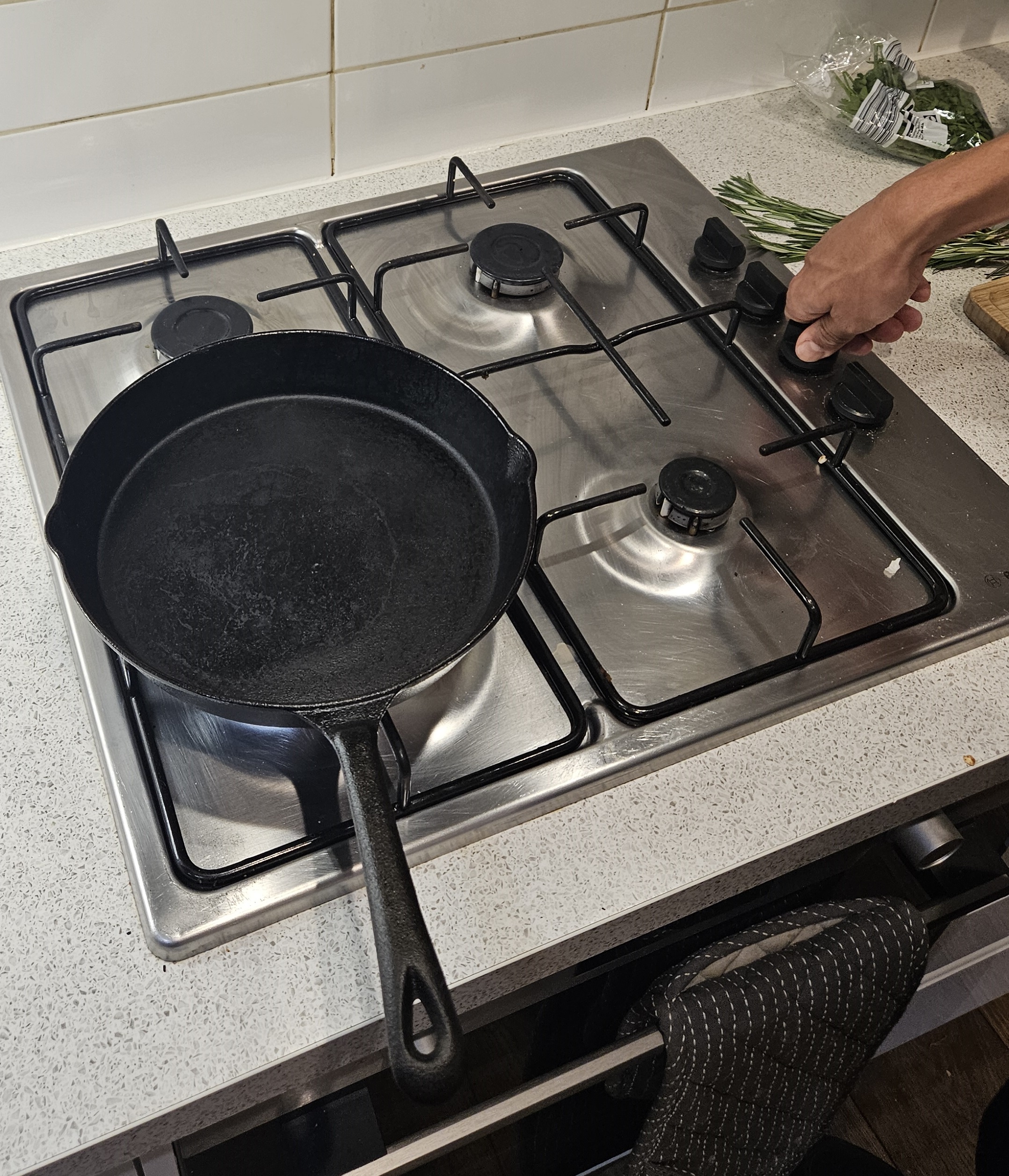
The cast iron pan.
Why cast iron? Huge thermal mass — so the pan doesn't drop in temperature when cold chicken hits it. That's what gives you the crust.
The science of patina. Polymerised oil bonds to the iron — naturally non-stick, and improves with every use.
Listen to the pan — a loud sizzle means water is evaporating. Silence means you're steaming, not searing.
Don't move the meat.
Let it release itself. If it sticks, it's not ready to flip.
The Maillard reaction — where flavour is built.
Maillard reaction — chemical reaction involving amino acids + sugars + heat, for example the browning on meat.
Caramelisation — process of browning sugar to give a butter-like flavor and brown color, for example the top of a crème brûlée
Both need high heat and a dry surface (hence salting ahead and patting dry).
Pull meat ~5°C before your target. It'll keep cooking while it rests.
Always rest the meat after cooking to allow juices to redistribute. Cut too early and you lose them to the board, leaving dry meat on the plate.
Fat is how flavour travels. Without it, taste has nowhere to go.
Butter, garlic, rosemary — aromatics infusing into fat.
Olive oil for lower heat. Neutral oils (sunflower, grapeseed) for high-heat searing. Then finish with butter.
Why finish, not start? Milk solids burn. Add butter at the end for flavour and basting.
Basting — arroser — spooning hot butter over the meat.
Tilt the pan. Spoon hot butter over the meat continuously.
It cooks the top of the chicken without overcooking the bottom — and perfumes the meat with the aromatics: garlic, thyme, rosemary.
If a dish tastes flat but well-seasoned, it doesn't need more salt. It needs acid.
Acid brightens and balances — it's the element most home cooks under-use.
Every great dish has acid somewhere, even if hidden: tomato sauce, wine in a braise, a squeeze of lemon at the end.
Deglazing the pan with white wine.
The brown stuck bits — the fond — are concentrated Maillard flavour. Acid dissolves them and lifts them into the sauce.
Wine in the pan sauce does double duty — acid and flavour — plus the alcohol evaporates and concentrates.
to season the chicken.
to carry the aromatics and crisp the skin.
to build the crust and the fond.
to lift the sauce and balance the plate.